Partnerships
Amazon invests in GranBio to help drive innovation in sustainable aviation fuel
GranBio's technology transforms forest and construction waste into lower-carbon fuel, helping reduce emissions in some of the most challenging sectors.
For decades, discarded wood from logging operations and building sites has gone to waste. GranBio is working to change that. Its advanced biomass technology converts forestry residues and construction debris into lower-carbon fuels, targeting hard-to-abate sectors like aviation and long-haul trucking. Amazon is supporting this innovative solution, helping fund GranBio's work to deliver a low-cost commercial solution for sustainable aviation fuel (SAF) production from these wastes.
How the technology works
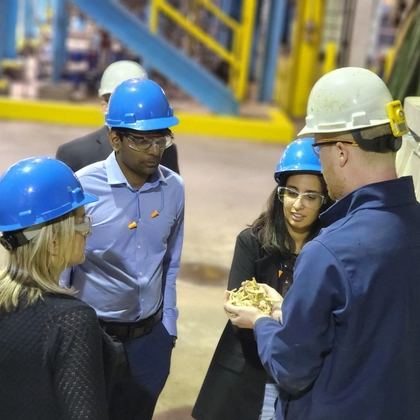
The technology makes SAF and other biobased fuels from waste materials such as leftover branches from forestry operations, crop stalks, and construction debris like discarded pallets and plywood. These materials are abundant across the United States and usually go unused, piling up in landfills or acting as kindling for wildfires.
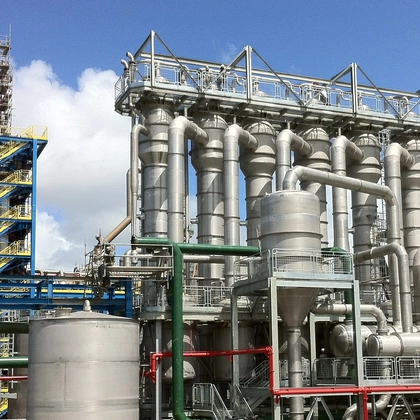
To transform this waste, the woody biomass is broken down to unlock the carbon stored in the plant fiber. That material is then synthesized into fuel molecules, the same kind of molecule found in petroleum diesel, gasoline, and jet fuel. The process also produces a byproduct that generates heat for the facility itself, reducing external energy inputs. The end products are drop-in renewable diesel, renewable gasoline, and sustainable aviation fuel that are chemically identical to their conventional equivalents and compatible with the same engines and infrastructure, enabling lower-carbon solutions for both aviation and ground transportation, including long-haul trucking.

Scaling up and revitalizing communities
GranBio plans to scale SAF production capacity over the next decade by repurposing shuttered pulp and paper mills across the United States. By converting these dormant industrial sites into advanced biorefineries, GranBio aims to restore skilled manufacturing jobs in those regions.
“Working with Amazon on this project brings us closer to proving that sustainable aviation fuel made from forest and construction waste can be a real, scalable solution for decarbonizing aviation,” said Kim Nelson, GranBio’s chief technology officer. “Our technology takes materials that would otherwise go unused and transforms them into clean energy, while creating opportunities to revitalize rural communities and improve the health of America's forests.”

Why Amazon is investing and what it means for the industry
The Climate Pledge is at the center of how we think about decarbonizing our operations. Our goal is to reach net-zero carbon emissions by 2040. Decarbonizing our transportation network is a key part of that work, and lower-carbon fuels are a critical tool in sectors where electrification isn’t currently available at scale.
“Aviation needs lower-carbon fuel, and the supply doesn't exist at scale yet,” said Andreas Marschner, Amazon’s vice president of Worldwide Operations Sustainability. “GranBio's technology has the potential to change that, turning abundant waste materials into drop-in fuels. By investing now, we're helping demonstrate the demand for solutions that, if they succeed, can become available to the whole industry. That's how we accelerate this transition. Not alone, but together."
Amazon is investing in this project as part of our broader work to develop and test emerging technologies with the potential to reduce carbon emissions across our global operations, including transportation, buildings, and packaging. By supporting efforts like GranBio's, Amazon is helping advance next-generation technologies that could supply lower-carbon fuel for our transportation network and others in the industry, building the pathways needed to reach net-zero carbon emissions by 2040.